
Why this matters to you
You spent decades building a career. Then a project fails, someone is hurt, and overnight you are facing a Committee of Inquiry, a police investigation, criminal charges, and your professional body moving to strike you off the register. Your livelihood, your liberty and your professional standing all hang in the balance at once.
Few lawyers have actually stood where you now stand — between a licensed professional and the full weight of the State’s prosecutorial machinery. I have. This is the story of the largest public inquiry in Singapore’s construction history, and how strategic advocacy kept one engineer out of prison and on the professional register.
The Nicoll Highway collapse: a defining case
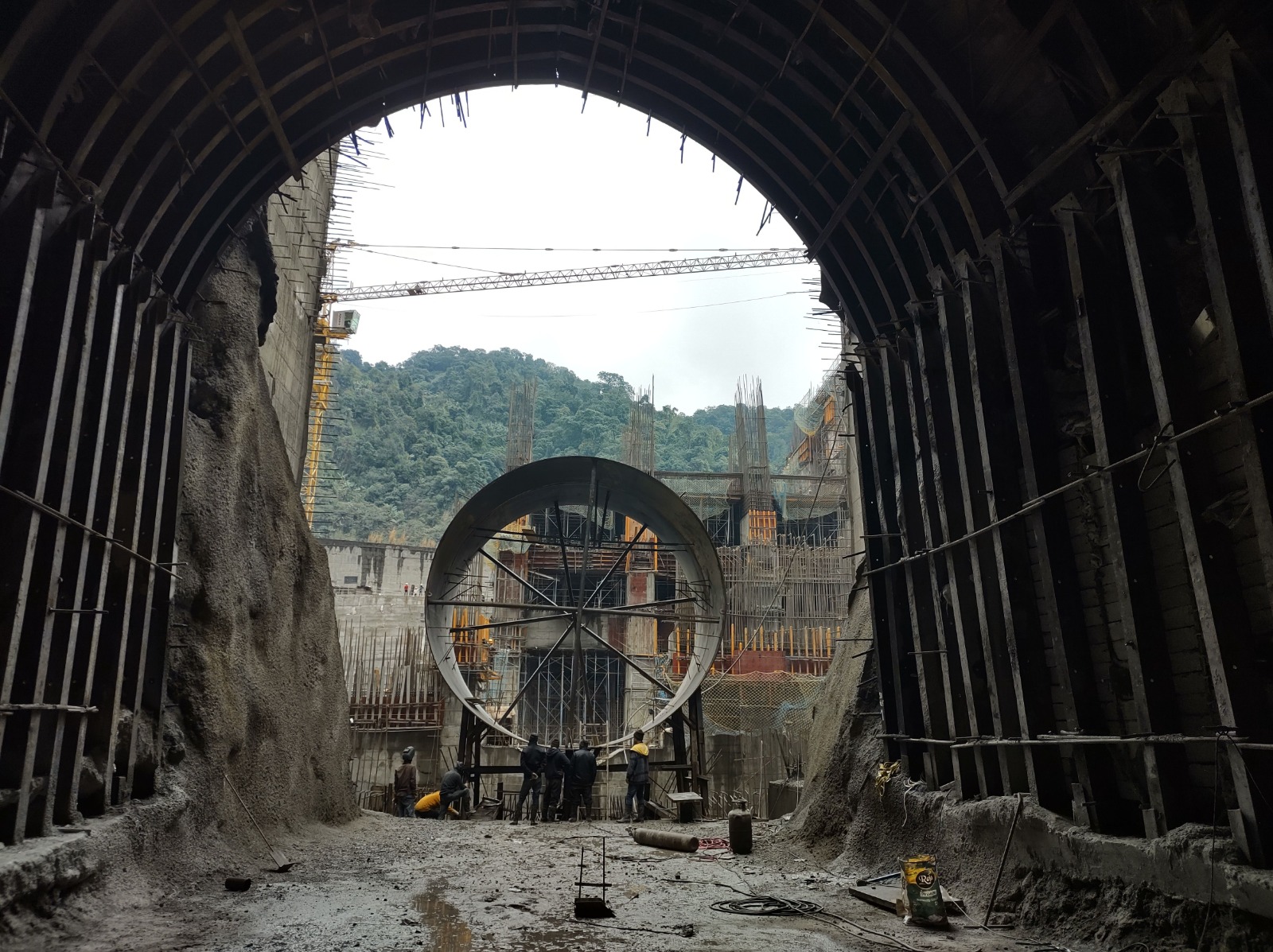
On 20 April 2004, a section of cut-and-cover tunnel being built for Singapore’s Circle Line MRT collapsed at Nicoll Highway. Four workers lost their lives. The excavation — one of the deepest ever attempted in Singapore, at some 30 metres below ground in soft marine clay — failed when the connection between the struts and walers supporting the retaining diaphragm walls gave way, triggering a progressive, bottom-up collapse of the earth-retaining system.
The fallout was seismic. The Land Transport Authority’s flagship infrastructure project had killed four men on one of Singapore’s busiest arterial roads. The President appointed a Committee of Inquiry (COI). The hearings ran over four relentless months — a massive public inquiry into structural design, geotechnical engineering, tunnelling methodology, instrumentation data, jet grouting, diaphragm wall design and the observational method. Hundreds of pages of findings followed, covering critical design and construction errors behind the earth-retaining wall failure.
I appeared as counsel before that Committee of Inquiry — I am recorded among the assisting counsel in the COI’s official report — and subsequently acted for Paul Broome, Nishimatsu Construction’s project co-ordinator on the Circle Line contract.
The stakes: careers, liberty and the register
Winning for a professional under this kind of pressure is not about a single courtroom appearance. It is a campaign, fought on multiple fronts simultaneously:
Front one — shaping the charge itself. Before trial, I made representations to the Attorney-General’s Chambers. The objective: to have my client prosecuted under the Factories Act — a safety-focused regulatory regime — rather than under the Penal Code provisions for causing death. Charge selection is where sentencing outcomes are truly determined. Succeed here, and the door to imprisonment narrows dramatically.
Front two — mitigation that told the true story. At sentencing, I presented comprehensive mitigation. The court imposed a fine of S$160,000 — and no custodial sentence. For a man who had faced the realistic prospect of prison, walking out of court with his liberty intact was everything.
Front three — the professional disciplinary tribunal. The criminal disposition was not the end. Mr Broome then came before the Professional Engineers Board, facing removal from the register. I represented him there too, and secured a suspension instead of removal. He kept his profession.
Two tribunals. Two victories that mattered most to him: his freedom and his licence to practise.
What this means for professionals facing proceedings today
If you are reading this because you have just been notified of a disciplinary inquiry, a police interview, or a coroner’s or COI summons, understand what your situation really involves. It is rarely one proceeding. It is typically three layers running in parallel or in sequence:
- The criminal or regulatory investigation and prosecution — MOM, AGC, the Police, or sector regulators;
- The professional body disciplinary proceedings — Professional Engineers Board, Medical Council, Law Society, Accountants, Architects Board and their counterparts — where the test is often lower and the sanction is your registration;
- Civil exposure — claims by injured parties, insurers and employers, where everything said in the first two layers can be used against you.
Coordinating all three — and critically, negotiating the charge in a way that protects your position before your professional body — is specialised work. This is precisely the counsel I provide.
Who I act for
Engineers and construction professionals. The Nicoll Highway Inquiry immersed me in structural engineering failures, tunnelling and underground construction, geotechnical design, diaphragm wall systems and site instrumentation. That expertise cuts both ways:
- If you are an engineer, project director, qualified person or contractor facing prosecution, a Committee of Inquiry, or disciplinary proceedings after a construction failure or workplace fatality — I have stood exactly there and won.
- If you are an owner, insurer or employer seeking to pursue such professionals — I know from the inside how these defences are built, and therefore how to dismantle them.
Doctors and healthcare professionals. I also represent medical practitioners before the Singapore Medical Council in disciplinary proceedings. The dynamics are the same: a career built over decades, endangered by a single complaint or adverse outcome.
Japanese and Korean corporations delivering infrastructure in Singapore. Multinational contractors executing public infrastructure projects — rail, tunnels, marine works, large-scale development — face distinctive risks in Singapore’s regulatory environment: joint venture exposure, qualified person obligations under the Building Control Act, MOM investigations under the Workplace Safety and Health Act (formerly the Factories Act), and reputational consequences that travel back to head office. Having acted for the project co-ordinator of a Japanese main contractor through the most scrutinised construction prosecution in Singapore’s history, I understand both the legal terrain and the commercial and cultural sensitivities at stake. I can advise Japanese and Korean companies on incident response, regulatory engagement and the defence of their personnel before Singapore authorities.
Professionals with professional indemnity cover. Most PI policies extend to disciplinary and regulatory representation. If you hold cover, you may already have the right to counsel of your choosing — check your policy before instructing anyone. If you do not hold cover, that is precisely when you cannot afford anything less than counsel who has taken these battles to a verdict.
Corporates commissioning internal inquiries. The forensic discipline of a four-month statutory Committee of Inquiry — marshalling expert evidence, cross-examining technical witnesses, distilling engineering causation into findings — transfers directly to internal investigations for corporate boards: post-incident reviews, employee misconduct inquiries, and governance investigations that may later be scrutinised by regulators or courts. Conducting them properly the first time is the difference between closure and a second crisis.
The pattern beneath the cases
Strip away the engineering jargon and every one of these matters reduces to the same architecture:
- A licensed professional with everything to lose;
- A technical incident whose causation is contested and complex;
- An institution — prosecutor, regulator, professional board, or employer’s boardroom — seeking accountability;
- A defence whose success depends on strategy decided long before anyone stands up in court.
Whether the forum is a Committee of Inquiry, a Coroner’s Court, the Professional Engineers Board, the Medical Council, or a corporate boardroom, I have appeared there, cross-examined there, and negotiated there. That is the experience I bring when your name is the one on the notice.
Salem Ibrahim is a Singapore advocate who acted as counsel to the Committee of Inquiry into the Nicoll Highway collapse and for professionals facing prosecution and disciplinary proceedings arising from it. He acts for engineers, doctors and executives in criminal, regulatory and professional disciplinary matters, and advises corporates on internal inquiries.
If you are a professional facing an investigation, inquiry or disciplinary proceedings, early representation is decisive — particularly at the charge-representation stage. Contact me for a confidential consultation — phone (65) 6226 1233.
FAQ
What happens to a professional after a Committee of Inquiry in Singapore?
Committee of Inquiry’s findings can trigger three parallel layers: prosecution by the Attorney-General’s Chambers under statutes such as the Factories Act (now Workplace Safety and Health Act), disciplinary proceedings before the professional’s board (such as the Professional Engineers Board), and civil claims by injured parties or insurers. A coordinated defence across all three is essential.
Can an engineer facing removal from the register get a suspension instead?
Yes. After the Nicoll Highway collapse, Salem Ibrahim LLC’s managing director defended an engineer before the Professional Engineers Board who faced removal from the register, and secured a suspension instead — preserving his registration despite criminal proceedings arising from the same incident.
Did anyone go to jail for the Nicoll Highway collapse?
The professionals prosecuted after the Nicoll Highway collapse were charged under the Factories Act rather than graver Penal Code offences, following representations to the Attorney-General’s Chambers. Salem Ibrahim’s client received a fine of S$160,000 with no custodial sentence, and a suspension rather than removal from the professional register.
Does professional indemnity insurance cover disciplinary proceedings in Singapore?
Many professional indemnity policies extend to representation at disciplinary and regulatory proceedings, and some include a right to choose your own counsel rather than a panel lawyer. However, coverage depends on timely written notification and the policy’s terms, which is why professionals should review their policy before a complaint arrives.
When should a professional engage a lawyer for an internal inquiry?
Before the first interview. Statements given in an internal inquiry — even an informal one — can travel to regulators, professional bodies and civil litigants, and an account given unprepared cannot later be improved without creating inconsistency. Early representation shapes the charge, the record and the disciplinary position simultaneously.
Salem Ibrahim LLC is a Distinguished Member of Singapore’s Best Law Firms 2027 (The Straits Times, in collaboration with Statista. They were recognised in 2023, 2024, 2026 and 2027. The firm holds three 5-Star ratings — including the top and only 5-Star rating in Aerospace. Salem Ibrahim acted as counsel to the Committee of Inquiry into the Nicoll Highway collapse and as defence counsel in the proceedings that followed.